header image 1 header image 2 header image 3
Google Groups
Subscribe to osr-interest
Email:
Visit this group

Categories

Best of OSR Group 2011 and Before

Teaching

The AMOS Project (AMOS)
The AMOS project is our annual lab course used to teach agile methods and open source. It is also our incubator for new software startups, see the AMOS project concept (in German).
Product Management (PROD)
Product management is a key business function of software vendors, yet it is rarely taught in school. We are taking a fresh new start with Harvard Business School-type cases (in German).

Engineering Tools Research

End-user Programming with Sweble
We take a wiki-style approach to end-user programming, trying to help those people who earn their living by programming, yet have no or little formal programming education. See the Sweble project.
Software Forge
Anyone engaged with open source needs a software forge. Whether in-house as part of Inner Source or facing the public, to enrich one’s ecosystem, we are trying to help you do it better.

Engineering Process Research

Inner Source
Large software organizations can improve code reuse and knowledge sharing by adding bottom-up open source practices to top-down project management. We have done it. And keep doing it.
Governance / Compliance
We identified risks of using open source in closed source products and are developing a handbook of best practices for open source governance. We work with Bearing Point and others on this.

Business Model Research

Single-Vendor Open Source
How did MySQL get to a $1B valuation? We are analysing best practices of dual-licensing and open core models and are capturing them as part of a handbook for future use.
Open Source Distributors
How are SUSE and Red Hat doing it? We analyse the production process of distributors on many dimensions, for example, how to manage open source investments.
Developer Foundations
Apache and Eclipse are two examples of successful open source developer foundations. But there are many more in industry verticals, for example. Just how to get it right? (In German.)
User Foundations
IT User Foundations are consortia of IT user firms who join forces to sponsor the development of non-competitively differentiating software components. This is the hot topic of 2012. Stay tuned!

Policy Implications

Developer Careers
We have long talked about how the world changes for open source software developers. A country like Germany would benefit from having more committers to key open source software projects.

Promotion of Thorsten Edelhäußer

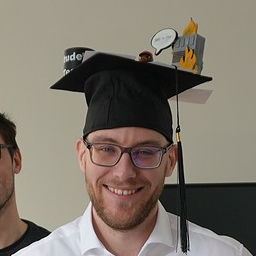
Today, Thorsten Edelhäußer passed his Ph.D. exam and thesis defense. Congratulations, Dr. Edelhäußer! Below, please find some photo impressions from the proceedings and the ensuing celebrations!

Continue reading Promotion of Thorsten Edelhäußer

OSR Group Thesis: Product Features in Commercial Open Source

Abstract: Although open source software has developed from a negligible phenomenon to an integral part of today’s business world, there are still companies which cannot see its commercial viability. As a consequence, these companies keep on ignoring this wide-spread trend, therefore missing possible profits and the chance to gain an advantage over their competitors. In order to provide arguments for the economic potential of open source software, a comprehensive model of commercially viable product features is described in the present thesis. This hierarchically structured model was created based on interview analysis, literature research and expert discussions and provides a detailed analysis of each feature, while explaining why these features are of economic value. Additionally, practical knowledge of open source companies is incorporated into this work through the use of a survey. The results of this survey are used to validate and expand the model and to generate insight about both importance and bundling of features. In the end, the reader will see which aspects of open source software products can be used to generate profit.

Keywords: Open source; commercial open source; single-vendor open source; open core model; open source distributors; product features; software product feature model

PDFs: Master Thesis, Aufgabenstellung

Reference: Florian Weikert. Product Features in Commercial Open Source Software. Bachelor Thesis, Friedrich Alexander-University of Erlangen-Nürnberg: 2012.

Letter to Stakeholders (Year-End 2011)

The Open Source Research Group is looking back on a second successful year at the Friedrich-Alexander University of Erlangen-Nürnberg (FAU).

Overview

  1. Research
  2. Teaching
  3. Entrepreneurship
  4. Public Service
  5. Thank You!
  6. Publications
  7. Student Theses
  8. More Links

1. Research

In our open source software engineering research, empirical work is farthest ahead, with interesting results: For example, by analyzing developer work rhythms we were able to show that most open source is being developed weekdays, 9-5, on company time. No surprise, you might say, but someone had to prove it. In the same vein, we have been empirically analyzing open source programming behavior, with more interesting results on how to improve tools to be published next year.

Continue reading Letter to Stakeholders (Year-End 2011)

Survey on Product Features in Commercial Open Source Software

The Open Source Research Group is trying to understand what precisely open source companies are selling to their customers. To that end, we are undertaking a survey aimed at commercially viable product features of open source products and services. We would be thankful if you could take the survey and help us validate our results. All survey participants will receive a summary of the survey results before the general public will learn about it through our publications.

The survey: http://osr.cs.fau.de/surveys/index.php?sid=22369

Thank you!

Survey on Open Source Use in Automotive Industry

Bearingpoint Consulting has teamed up with the Open Source Research group and is providing a survey on the use of open source software in the automotive industry. Bearingpoint is a leading European strategic management consulting firm. Martin Helmreich, one of our graduates, recently started to work at Bearingpoint. You can find the survey on the Bearingpoint website. It is currently open and we hope you will take it!

Mathematische Modellierung von Open Source

Die Open-Source-Forschungsgruppe an der FAU betreibt empirische Forschung, in der mathematische Modellbildung der untersuchten Phänomene eine wichtige Rolle spielt. Deswegen sind wir auf der Suche nach mathematischer Kompetenz für Bachelor und Master-Arbeiten. Idealerweise mögen Sie auch Open Source :-) oder zumindest die Herausforderung mit grossen relevanten (realen!) Datenmengen zu arbeiten. Die Daten liegen bereits vor.

Continue reading Mathematische Modellierung von Open Source

Open Source Licenses and Community Growth

You may have been reading Matt Aslett’s analysis of the trend to permissive licensing as well Gordon Half’s discussion of this trend. I enjoyed reading them and agree with the overall trend. I don’t quite agree with the predicted downfall of Copyleft licenses, though, and I love the irony of it.

Strong copyleft licenses play an important role in dual-core licensing as in single-vendor open source software. Copyleft is a tool by which vendors ascertain their (effective) ownership over some piece of software. Thus, the invention of copyleft benefits a specific commercial go-to-market strategy.

If you are a student at FAU and would like to further analyse this trend, please talk to me. We have a large database on open source project data and we’ve been looking for a competent student for a while to correlate various factors and how they contribute to open source community growth.

OSR Group Thesis: Analysis and Comparison of Open Source Foundation (in German)

Abstract (from introduction): [...] Diese Bachelorarbeit soll sich der Aufgabe annehmen, Gemeinsamkeiten und Unterschiede von Open-Source-Vereinigungen in einem Vergleichsschema zusammenzuführen. Hierfür werden zunächst sechs Open-Source-Vereinigungen analysiert und daraus relevante Vergleichsdimensionen und -beschreibungen entwickelt. Anschließend soll dieses erstellte Schema anhand weiterer vier Vereinigungen validiert und schließlich auf deren Stärken und Schwächen untersucht werden.

PDFs:  Final thesis (in German), original work description

Reference: Sebastian Berschneider. Analyse und Vergleich von Open Source Vereinigungen. Bachelorarbeit, Friedrich-Alexander University of Erlangen-Nürnberg: 2011.

OSR Group Thesis: Best Practices of Adopting Open Source Software in Closed Source Software Products (in English)

Abstract: Open source software offers great chances in software development through cost savings and shorter time to market. Open source software is used by companies – in some cases consciously, in others unconsciously, which puts its implications on the business. This thesis deals with these implications. Threats a company might face are outlined and best practices to counter them are named. This work was performed as a combination of research in publications and interviews with employees at companies that deal with open source components. Result of this research on the one hand is a set of threat scenarios and on the other hand a set of best practices a company should follow to avoid problems arising form the use of open source software. Finally, it can be stated that open source software can be handled without putting the business at risk. The number of practices to follow and the actions to perform is manageable.

PDFs: Final thesis (in English), original work description

Reference: Martin Helmreich. Best Practices of Adopting Open Source Software in Closed Source Software Products. Diplomarbeit, Friedrich-Alexander University of Erlangen-Nürnberg: 2011.